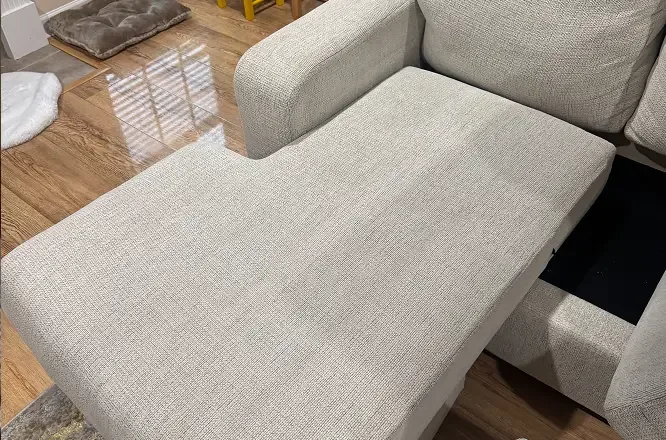
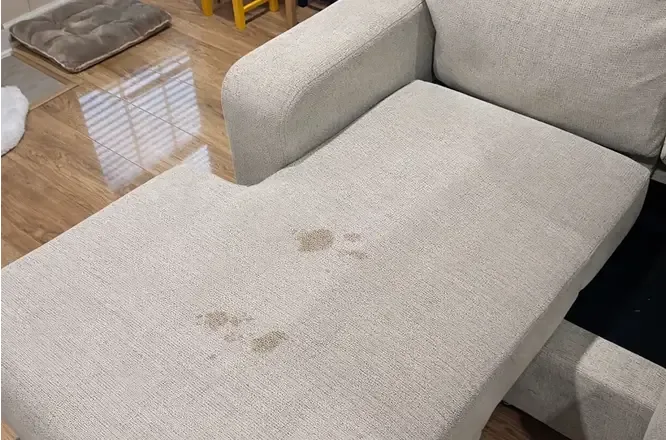
What steam cleaning (hot water extraction) does
Steam cleaning, properly called hot water extraction, injects hot water and cleaning solution into the fabric and immediately vacuums it back out under high suction, carrying the loosened soil with it. It is the most thorough method for lifting embedded grime, body oils and general soiling out of a couch, and it is excellent on hardy synthetic and blend fabrics — the kind of durable upholstery you find on most family couches.
Its one limitation is moisture. On fabrics that cannot tolerate getting wet — some wools, certain linens, delicate or moisture-sensitive materials — hot water extraction risks shrinkage, watermarking or dye bleed if it is used without care. That is not a fault of the method; it is a reason to match the method to the fabric.
What dry (low-moisture) cleaning does
Low-moisture "dry" cleaning uses specialist compounds or a solvent-based process with very little water. It cleans effectively while keeping the fabric almost dry, which makes it the safe choice for delicate and moisture-sensitive materials — velvet, some wools, linens, and anything coded "S" for solvent-only. It is gentler, dries fast, and avoids the watermarking risk that water carries on those fabrics.
The trade-off is that on a heavily soiled, hardy couch, low-moisture cleaning does not flush embedded grime out as aggressively as full extraction. On the fabric it is designed for, that is a non-issue; on a grimy synthetic modular, extraction wins.
How we decide (and why it matters)
The right answer is not "we always steam clean" or "we always dry clean" — it is "what does this couch need?". We fabric-test every couch in an inconspicuous spot before we start. If the fibre is stable and hardy, it gets hot water extraction for the deepest clean. If it is wool, delicate or shows any sign of dye instability, it gets a low-moisture clean instead — same result, no risk to the piece. The method changes to suit your couch; the published price does not. That single habit — testing first, then choosing — is the difference between a couch that comes back beautifully and one that comes back with a watermark ring.
Rather have it done properly? We're an Adelaide-wide couch and upholstery cleaning service based in Mawson Lakes — get a free quote or call 0480 744 985, 7 days a week. Published prices, same day most suburbs.